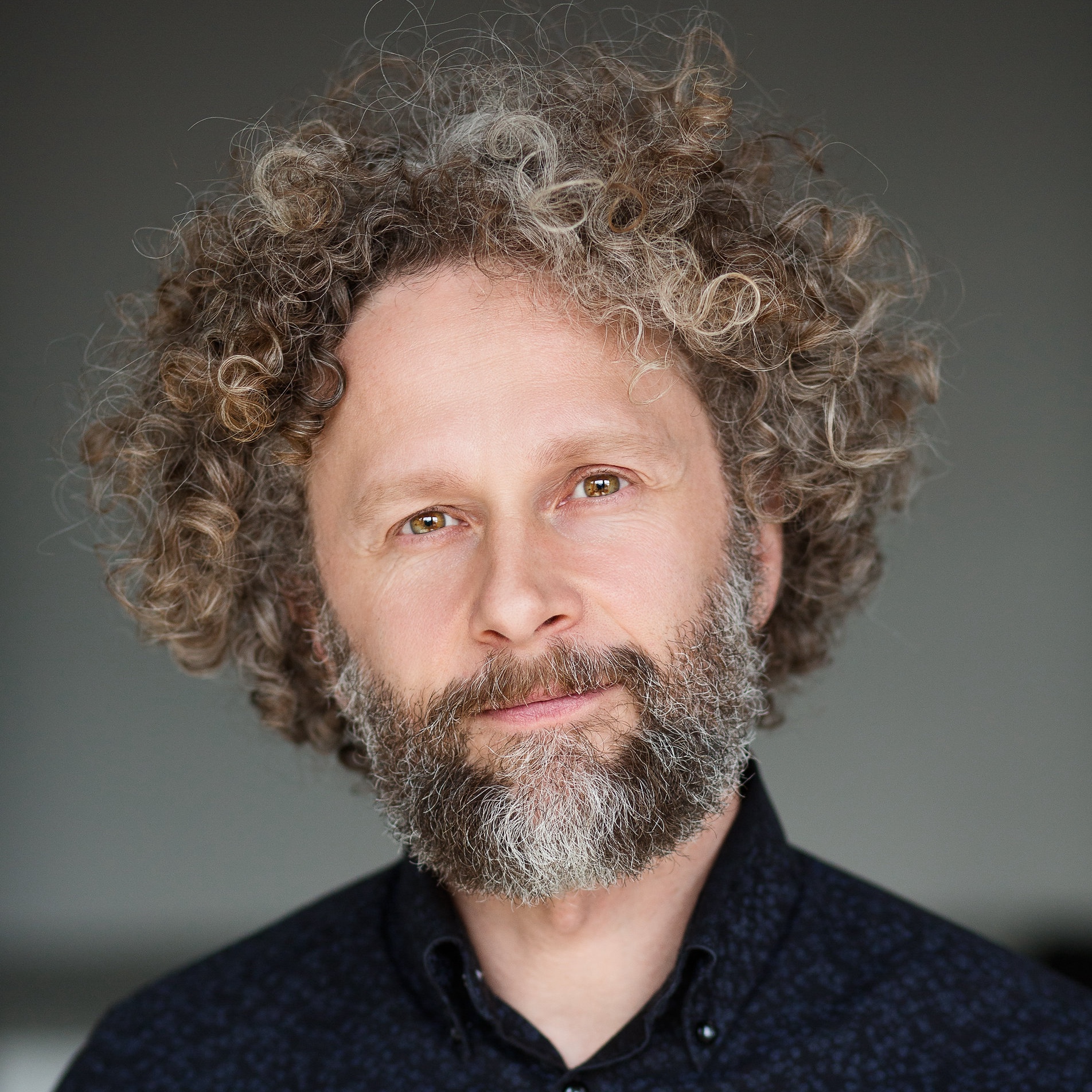
The 2026 CHCCS/SCDHM Service Award is presented to Professor Paul Kry for his wisdom and guidance to the organization during a period in which the CHCCS community and the Graphics Interface conference (GI) faced challenges that required strong leadership to navigate the many changes that were necessary to adapt to rapidly evolving circumstances over a tumultuous decade. The continuing success and strong reputation that the GI conference enjoys today is in no small part due to Paul’s efforts over many years.
Paul served as President of CHCCS from 2013 through 2025 – the longest on record after founding President Wayne Davis – and he actively continues as Past President. He was the first CHCCS President from the “new wave” of Canadian researchers who came of age when the GI was a well-recognized and important international conference for computer graphics, visualization, and human-computer interaction research. Paul was the graphics co-chair and served as general chair for Graphics Interface 2014 at Université de Montréal and École Polytechnique de Montréal.
Paul has worked actively to maintain GI as a vibrant, high-quality venue that showcases Canadian and international research. Starting in 2005, GI was often partnered with the Canadian AI and computer vision & robotic communities as the AI/GI/CRV triple conference. In 2020, Paul helped transition the GI conference back to a stand-alone conference to better focus on the needs of the computer graphics, visualization, and human-computer interaction research community. He actively recruited new leaders for the conference and renewed the membership of the executive committee.
In his role as President of CHCCS, Paul was a key factor in keeping the GI conferences alive, active, and relevant throughout the COVID years and beyond, when face-to-face meetings had to be temporarily replaced with virtual meetings that might not foster the communal spirit characteristic of traditional annual GI conferences. Paul helped ensure continuity as the conference adjusted and then began its graceful return to in-person meetings while experimenting with hybrid models in the wake of the COVID experience.
Paul’s contributions include suggestions that have improved how the conference and the organization support the Canadian research community, including helping bring about improvements to the CHCCS website and the open‑access digital library of past conference proceedings. To provide a lively forum that complemented the reviewed paper conference track, he initiated an invited speaker track in 2015 and he introduced the “interview” style for Achievement Award recipients to talk about their careers in an informal setting. Under his presidency and encouragement, CHCCS introduced Early Career Researcher Awards to recognize our community’s rising stars.
Beyond GI, Paul has demonstrated a sustained commitment to serving and strengthening the broader graphics and animation research community. Through long-standing leadership roles in ACM SIGGRAPH, he helped strengthen ties between CHCCS and ACM, including ensuring the continued archival availability of GI proceedings in the ACM Digital Library. He has served on the SIGGRAPH executive committee and as chair of the SIGGRAPH specialized conferences committee, co-chaired the ACM/EG Symposium on Computer Animation on multiple occasions, and regularly fosters collaboration through computer animation workshops at McGill’s Bellairs Research Institute.
Paul received a B.Math. (1997) in computer science with electrical engineering electives from the University of Waterloo, and an M.Sc. (2000) and Ph.D. (2005) in computer science from The University of British Columbia. During his doctoral work he was a visiting researcher at Rutgers University. He was a postdoctoral fellow at INRIA Rhône-Alpes and Université René Descartes. He has been a faculty member in the School of Computer Science and the Centre for Intelligent Machines at McGill University since 2008. His research interests are in physically based animation and simulation, with a focus on fluids, deformable bodies, contact, and friction, and an emphasis on differentiable simulation, reduced-order methods, and the integration of machine learning with physical models.