Search results for: “advanced”

  • Nancy Knowlton and David Martin

    Nancy Knowlton and David Martin

    Nancy Knowlton and David Martin are entrepreneurs and Canadian Digital Media Pioneers. Their impact in digital media has been profound across Canada and internationally. They recognized in the 1980’s the potential of touch-based interaction and together they co-founded SMART Technologies. Because of their insight and leadership, SMART’s large touch displays are now in use worldwide.

    Long before advanced touch technologies became commonplace, David and Nancy believed that large, touch-sensitive information displays and accompanying software had the potential to be an important technology. Together they founded SMART Technologies, Inc. in 1987, where they brought their vision into market. Under their guidance, SMART products were created that embodied the essence of digital media. Products ranged from a large variety of single-touch and multi-touch displays designed for boardrooms and classrooms, to digital clickers that allow multiple students to share a common display, to software specifically designed to support collaborative work, education, screen sharing, public presentations, and brainstorming. Over the years, these innovations became standard fixtures in many places, but especially in schools – 90% of the classrooms in the UK are equipped with SMART products.

    Beyond simply building products, David and Nancy have had profound influence mentoring and inspiring Canadians in high technology. As members of numerous panels, boards, and advisory councils, their vision has helped shape thinking around technology ranging from the grass roots level up to the provincial and federal policy level. They have also been steadfast supporters of university-based research. They and SMART Technologies Inc. have been deeply involved in directly supporting a number of international research conferences, as well as providing cash and in-kind support for individual and group research grants across Canada. Perhaps the best examples of this are their encouragement and support for two NSERC strategic networks, NECTAR (Network for Effective Collaboration Technologies through Advanced Research) from 2004-2009, led by Dr. Ron Baecker, and SurfNet (network for surface computing interfaces and software engineering) from 2010-2015, led by Dr. Frank Maurer.

    Their individual awards are many. These range from local Canadian awards to international awards, such as David Martin’s Alberta Centennial Medal for High-Tech Innovation and his 2004 Canadian Advanced Technology Alliance Award for Private Sector Leadership in Advanced Technology. Nancy Knowlton has been recognized as one of Canada’s top businesswomen. She was the 1999 Canadian Woman Entrepreneur of the Year in the Export category, and was awarded an honorary Doctor of Commerce degree from Saint Mary’s University and Bishop’s University in recognition of her many business accomplishments. In 2002 they shared a prestigious Manning Innovation Award. Most recently, in 2013, David was recognized for his service to education and named an Officer of the Order of the British Empire (OBE).

    Embracing both the commercial and academic communities, they constantly strive to give back some of the resources and knowledge they had gained.  They founded The SMARTer Kids Foundation in 2003 to provide grants that reduce the price of SMART products to all accredited, not-for-profit educational institutions, museums, libraries, and home schools in the United States and Canada. Their vision continues today. They recently co-founded BYYE Labs, an innovative company whose goal is to affect new and emerging digital technologies. It is for their sustained innovations and entrepreneurial contributions to the digital media industry that Nancy Knowlton and David Martin are recognized as a Canadian Digital Media Pioneers.

    Biographies

    David Martin received his BSc in applied mathematics from Concordia University in 1971 and began his professional career as a statistical analyst at Bell Canada. He then worked as the Western Division Manager for Rio Tinto North American Services Limited for five years before co-founding Keyword Office Technologies Limited in 1978, where he was Executive Vice President. After a 16,000-kilometre road trip with his wife Nancy during which they envisioned an innovative system that fused the best from television, computers and the Internet, they co-founded SMART Technologies Inc. in 1987 where he served as Executive Chairman until 2012. In 2012 Martin co-founded the Byye Group with Nancy Knowlton, where he is Executive Chairman and CTO while continuing as Chairman for SMART.

    Nancy Knowlton received a Diploma of Collegial Studies and a Bachelor of Business Administration from Bishop’s University, as well as an MBA in marketing and finance from Saint Mary’s University. Both universities have bestowed Knowlton with honourary doctorates. Knowlton taught accounting and computer science at Saint Mary’s and qualified as a Chartered Accountant in Alberta in 1982. She went on to become Senior Manager at an international accounting firm in Calgary. As Co-founder, President and CEO of SMART Technologies Inc., she was instrumental in growing the company from a start-up to almost US$800 million of annual revenue before resigning in 2012. She has garnered multiple awards (see above) for developing export markets, technical innovation, and business leadership. Globally recognized as an expert in education and classroom technology, in 2002-2003, Knowlton joined a nine-member independent commission to review Alberta’s basic education system, and has spoken around the world on the topic of the 21st ­century classroom. She currently serves as the President and CEO of The Byye Group.
  • Ron Baecker

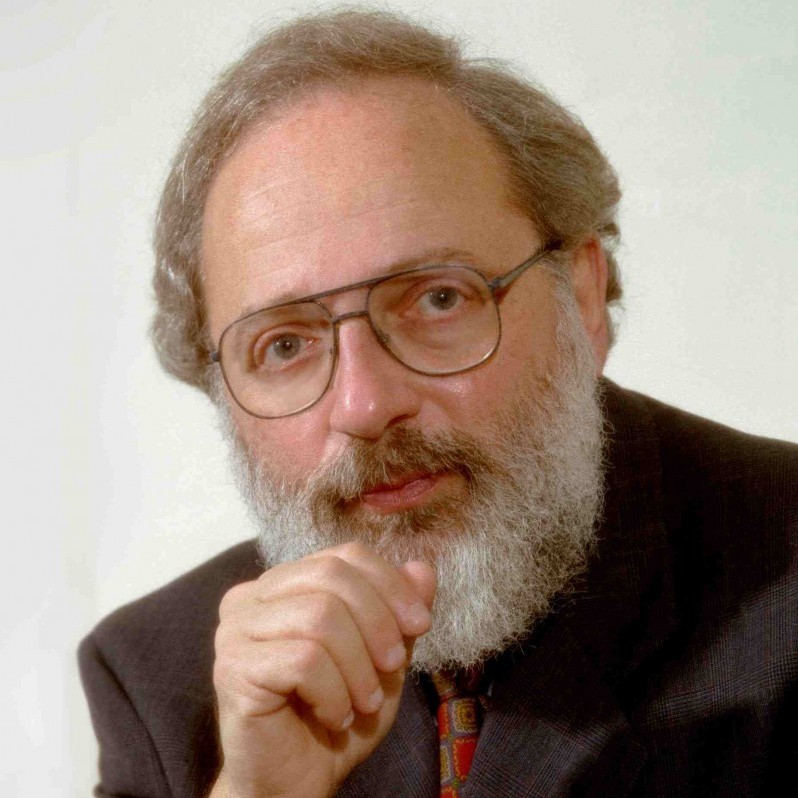
    Ron Baecker

    Ronald Baecker is a visionary and a Canadian Digital Media Pioneer. He joined the University of Toronto as an assistant professor in the Department of Computer Science in 1972 where, for over four decades, he has been a guiding force in keeping Canada at the forefront of important research areas as they emerge: computer animation, human-computer interaction (HCI), computer-supported cooperative work (CSCW), and most recently the confluence of digital media and patient-centred healthcare, especially for the elderly.

    His influence in these and many other areas is in large part due to the organizations he has helped establish, which have nurtured successive generations of Canadian digital media researchers and practitioners.

    Ron was a guiding force in developing the Dynamic Graphics Project (DGP) at the University of Toronto into the flagship academic laboratory for computer graphics and human-computer interaction within Canada. With colleagues across a variety of disciplines Ron explored the use of interactive computer graphics in areas as diverse as newspaper layout, debugging and visualization of computer programs, and taxi cab scheduling. His now classic 16mm sound film “Sorting Out Sorting” is one of the earliest examples of using animation techniques to understand the run-time behavior of complex algorithms.

    Foreseeing the importance of the Unix revolution before many others did, he founded Human Computer Resources, a company that focused on the development of easy-to-use tools for software development, and later he helped establish one of the early Canadian open source software efforts to support real-time web-casting and archiving of presentations.

    As computer technology matured and personal computing became a reality, Ron was one of the people who understood the need to establish human-computer interaction as an independent discipline that drew both from its engineering and its social science roots.

    He co-edited two editions of academic readings that helped to define the field of HCI and also a set of readings for computer-supported cooperative work when it was still in its infancy as an emerging sub-discipline of HCI.

    As important as these contributions are, perhaps the real legacy Ron has created is bringing together digital media researchers across Canada. In 1982 he was co-chair for the first Graphics Interface conference. Held in Toronto, it transformed the only-in-odd-years conference of the Canadian Man-Computer Communications Society into an annual event and for the first time brought members of the art and design community to join with the scientists and engineers who worked in computer graphics, user interface design, and related areas. Graphics Interface continues to this day, with its sponsoring organization renamed the Canadian Human-Computer Communications Society.

    In 1999 Ron founded the Knowledge Media Design Institute at the University of Toronto, a highly multidisciplinary institute exploring collaborative design in the artifacts of knowledge creation, production and distribution. In 2003, he led the formation of NECTAR, the Network for Effective Collaboration Technology through Advanced Research, that brought the top CSCW researchers from across Canada into an NSERC- and industry-funded strategic network that laid the groundwork for two networks that followed, the NSERC strategic network SurfNet that focuses on nontraditional digital display surfaces including multi-touch screens, tabletops, and wall-sized displays, and GRAND, a federally funded network of centres of excellence in digital media.

    Ron has inspired multiple generations of Canadian digital media researchers. The projects and organizations he has initiated are lasting testaments to his vision. His intellectual children and grandchildren have secured a global presence for Canada in the field of digital media. It is for these outstanding accomplishments that Ronald Baecker is recognized as a Canadian Digital Media Pioneer.

    Biography

    Born in 1942, Ronald Baecker received his BSc in physics, his MSc in electrical engineering, and his PhD in computer science at MIT, after early interest and recognition in science during high school. His doctoral dissertation on interactive computer-mediated animation included both algorithmic and sketch-based components that could be parameterized using an interactive picture processing language. After serving as a commissioned officer in the US National Institute of Health he joined the Department of Computer Science at the University of Toronto, where he has remained except for leaves when he was establishing the companies HCR Corporation and Expresto Software Corporation.  Much of his research was conducted in the Dynamic Graphics Project.  In 1999 he founded the Knowledge Media Design Institute, where he is chief scientist. He directs the Technologies for Aging Gracefully Laboratory (TAGlab), and he is an affiliated scientist in the Kunin-Lunenfeld Applied Research Unit at Baycrest. Ron was the founding Bell Universities Laboratories Chair in Human-Computer Interaction, which he held from January 2002 to December 2011.

    Ron has published over 175 papers and articles on human-computer interaction and user interface design, user support, software visualization, multimedia, computer-supported cooperative work and learning, the Internet, entrepreneurship and strategic planning in the software industry, and the role of information technology in business.  He is the author or co-author of two published videotapes and four books, and co-holder of two patents.  One of the 60 Pioneers of Computer Graphics named by ACM SIGGRAPH, he is an ACM fellow, a member of the CHI Academy, and he received the Canadian Human-Computer Communications Society Achievement Award in 2005.

    Selected Works

    Baecker, R.M. (1969). Picture-Driven Animation. Proceedings 1969 Spring Joint Computer Conference, May, 273-288 (Reprinted in H. Freeman (Editor), Tutorial and Selected Readings in Interactive Computer Graphics, IEEE Computer Society, 1980, 332-347).

    Baecker, R. M., & Marcus, A. (1989). Human factors and typography for more readable programs. ACM.

    Mantei, M.M., Baecker, R.M., Sellen, A.J., Buxton, W.A.S., Milligan,T., and Wellman, B. (1991).  Experiences in the Use of a Media Space. Proceedings ACM SIGCHI CHI’91, 203-208.

    Baecker, R., Small, I., & Mander, R. (1991, March). Bringing icons to life. In Proceedings of the SIGCHI Conference on Human Factors in Computing Systems (pp. 1-6). ACM.

    Posner, I.R., and Baecker, R.M. (1992). How people write together. Proceedings 25th Hawaii International Conference on System Sciences, Vol. IV, 127-138.

    Baecker, R. M., Nastos, D., Posner, I. R., & Mawby, K. L. (1993, May). The user-centered iterative design of collaborative writing software. In Proceedings of the INTERACT’93 and CHI’93 conference on Human factors in computing systems (pp. 399-405). ACM.

    Baecker, R. M. (1993). Readings in groupware and computer-supported cooperative work: Assisting human-human collaboration. Morgan Kaufmann Pub.

    Baecker, R. M. (1995). Readings in Human-Computer Interaction: toward the year 2000. Morgan Kaufmann Pub.

    Abrams, D., Baecker, R., & Chignell, M. (1998). Information archiving with bookmarks: personal Web space construction and organization. In Proceedings of the SIGCHI conference on Human factors in computing systems (pp. 41-48). ACM Press/Addison-Wesley Publishing Co..

    McGrenere, J., Baecker, R. M., & Booth, K. S. (2002, April). An evaluation of a multiple interface design solution for bloated software. In Proceedings of the SIGCHI conference on Human factors in computing systems: Changing our world, changing ourselves (pp.164-170). ACM.

    Baecker, R.M., Moore, G., Keating, D., and Zijdemans, A. (2003) Reinventing the lecture: Webcasting made interactive.  Proc. HCI International 2003, June, Lawrence Erlbaum Associates, Volume 1, 896-900.

    Wu, M., Baecker, R.M., and Richards, B. (2005) Participatory design of an orientation aid for amnesics. Proceedings ACM SIGCHI 2005.

    Massimi, M., Baecker, Ronald M., and Wu, M. (2007). Using participatory activities with seniors to critique, build, and evaluate mobile phones. Proc. Ninth International ACM SIGACCESS Conference on Computers and Accessibility, Tempe Arizona, October, 155-162.

  • Sara Diamond

    Sara Diamond

    Sara Diamond is a Canadian Digital Media Pioneer who has long championed interdisciplinary collaboration — engaging artists and designers with engineers and scientists in a spirit of diversity and inclusion. From 1992 to 2005 she initiated visionary programs at the Banff Centre, Canada’s preëminent arts and creativity incubator. The Banff New Media Institute, created and led by Sara during its first decade, provided a national venue and an international forum for exploring many of the ideas and challenges emerging from digital media.

    An artist, video curator, cultural critic, television-video producer, and an instructor at art centres and colleges throughout North America, Sara is widely published in Canadian and international art and social history journals. Her series of articles in 1985 on cultural politics and feminist ideology investigated the class position of artists and women and links to the production of culture. She later organized several events for Aboriginal artists, producers, directors and critics encouraging dialogue within Canada, and across the United States and the Pacific Rim. These included a series of Aboriginal streaming workshops that examined local radio and television practices of First Nations in Canada and Aboriginal peoples throughout the world, the use of streamed media for creative processes, and technologies such as the World Wide Web as vehicles for producing and disseminating First Nations and Aboriginal art and culture.

    With the creation of the Banff New Media Institute, Sara introduced a uniquely Canadian response to digital media as an emerging cultural force. It succeeded in providing a new convergent space for art, design, science, and technology. Developed as both a physical and virtual centre, the institute created and supported research, social networks, artworks, designs, technologies, theorizations, economies, and even companies.

    Sara Diamond
    Photo courtesy Sara Diamond.

    For many, the Institute was a site of first engagement for dialogues, strategies, and practices responding to the intensive technological changes underway: the massive adoption of “new media” (and later “digital media”), and the rise, fall, and re-emergence of the digital economy. As documented in her book (co-edited by Sarah Cook) Euphoria & Dystopia: The Banff New Media Institute Dialogues, Sara hosted important international think tanks and collaborations at the BNMI on information and communications technology, digital media, and scientific research, including a series of influential summits examining the relationship between art and technology. Invited artists, designers, critical thinkers and scientists from Latin America, Africa, Asia, Central and Western Europe, the United States and Canada coalesced in cross-disciplinary teams that explored the many perspectives and effects of “going digital.”

    The summits were forums for “design thinking” about the digital world, and helped researchers and practitioners at the forefront of their fields share ideas and visions. Most importantly, the summits engendered in participants a new appreciation for interdisciplinary collaboration. They also helped provide a basis for new initiatives, including the vision for a pan-Canadian digital media research network that formed the early nucleus for the GRAND Network of Centres of Excellence.

    Social issues have been at the core of her work, along with family relationships, labour struggles, and modern day working conditions – especially for women. Her role in advancing artists’ and designers’ work in new technologies has been widely recognized, and her own practice as a new-media artist is heavily influenced by design. She acknowledges that “I … position myself between the two fields … [t]he participatory, iterative process of design – the rigour of the design process – I find that very attractive.” Her ambitious CodeZebra project combines art and science and includes CZOS, an “advanced web based visualization tool that enables conversation between different individual and groups on the Internet.” CodeZebra won a Canadian Digital Innovation Award in 2003.

    As President of OCADU, Sara continues her efforts to promote interdisciplinary research and to build digital media industries in Canada. The Digital Futures Initiative and other new research initiatives are exploring the intersections of design with such areas as health and sustainable technologies. She also played a leading role in establishing OCADU’s unique Aboriginal Visual Culture Program and is a co-principal investigator in the Centre for Information Visualization/Data Driven Design, a cross-disciplinary initiative with York University that brings together artists, designers, engineers and scientists.

    For many years, Sara has been a catalyst in bringing together the many disciplines within the digital media community in dialogue and collaboration. Her leadership at the Banff New Media Institute helped keep Canada at the forefront of international research and practice, while inspiring many others to follow in her footsteps. For this and many other contributions to Canadian digital culture, Sara Diamond is recognized as a Canadian Digital Media Pioneer.

    Biography

    Born in 1954, Sara Diamond received a BA in History and Communications from Simon Fraser University, and an Masters in Digital Media Theory from the University of Arts, London, and a PhD in Computing, Information Technology and Engineering from the University of East London. She has taught at the Emily Carr College of Art and Design, the California Institute for the Arts, University of California, LA (where she continues as an Adjunct Professor) and the Technical University of British Columbia. Beginning in 1992 she was the Director of the Television and Video Program at the Banff Centre and later the Artistic Director of Media and Visual Art, Founding Director of the Banff New Media Institute and Director of Research. Since 2005 she has been the President and Vice-Chancellor of the Ontario College of Art and Design University (OCAD University).

    Diamond has published articles and reviews in Canadian and international art, culture and labour publications including FUSE Magazine, Vanguard, C Magazine, Video Guide, Parallelogram, Popular Studies Journal, and B.C. Heritage. Her video art and broadcast works have been exhibited and screened in Europe, England, Mexico, the Pacific Rim, the United States and Canada, and at numerous video and film festivals around the world. Her videos and installations are in many collections such as the National Gallery of Canada where she had a retrospective in 1992, the Museum of Modern Art in New York, the Canada Council Art Bank and the California Institute of the Arts. She has served on numerous advisory boards and committees including the Executive of the Council of Ontario Universities, the Ontario Ministry of Culture’s Advisory Council on Arts & Culture, the Standing Advisory Committee on University Research and the Standing Advisory Committee on International Relations for the Association of Universities and Colleges, and the expert panel on the State of Science & Technology in Canada for the Council of the Canadian Academies. She is an appointee of the Order of Ontario and of the Royal Canadian Society of Artists and a recipient of the Queen’s Diamond Jubilee Medal.

    Selected Works

    Diamond, S. & Roberts, V. (2012) Taking Ontario Mobile, Toronto: Mobile Experience Research Centre.

    Diamond, S. (2012) Many Points of Light: Visualization and the Converging Aesthetics of Art, Design and Science, Reprinted 2012, in Critical Digital Studies Reader. ed. Kroker, A. & M. L. Toronto: UT Press.

    Diamond S. (in print) Moving Softly Forward, In Borders and Interfaces: The Challenges of Wearable Technology Design, eds. Paraguai, L. & Zuanon, R., Sao Paolo: Assunto Press.

    Diamond, S. (2012) with Cook, S., Euphoria and Dystopia: The Banff new media dialogues. Banff: Banff Centre Press and University of Waterloo, Riverside Architectural Press.

    Guia, G., Oliver, S., Diamond, S., Chevalier, F. (2012) Visualizing Sentiments in Business Customer Relationships. ACM, CHI’12, May 5–10, 2012, Austin, Texas, USA.

    Oliver, S.; Gali, Guia, Chevalier, F. & Diamond, S. (2012) Fracturing Media Paradigms: Online Navigation of Online News Media. ACM. DIS 2012, June 11-15, 2012, Newcastle, UK.

    Diamond, S. & Lewis, L. (2011), Innovation by Design: Differentiator in the Digital Age. Ed. MacDonald, L. I., Policy Options, September, 2011.

    Diamond, S.  (2010) Mapping the Collective, In (ed) Vesna, Victoria and Paul, Christiane, Context Creators, Cambridge: Intelligence Press.

    Chevalier, F &. Diamond, S. (2010) The Use of Real Data in Fine Arts for Insight and Discovery: Case Studies in Text Analysis IEEE VISWEEK 2010, Discovery Exhibition, Salt Lake City, October 2010.

    Diamond, S. Moving Out of Bounds (2010) In Buckley, B. & Conomo, J., eds. Rethinking the Contemporary Art School. Halifax: NSCAD University Press.

    Diamond, S. (2009) Participation, Flow and the Redistribution of Authorship: The challenges of collaborative exchange and new media curatorial practice. In: Paul, C., ed. New Media in the White Cube and Beyond. Berkeley: University of California Press, Chapter Seven. pp. 135 – 162.

    Diamond, S., Ladly, M.  (2008) Creating Methodologies for Mobile Platforms, in (eds) Ladly, M. and Beesley, P. Mobile Nation. Waterloo: Riverside Press.

    Diamond, S.  (2008) Reframing the Cathedral: Opening the Sources of Technologies and Cultural Assumptions, In (ed) A. & M. Kroker, A. & M.  Critical Digital Studies Reader. Toronto: University of Toronto Press.

    Diamond, S., & Code Zebra Inc. (2000-2010): CodeZebra  (CodeZebraOS, performances, wearable technology). www.codezebra.net. Canada, UK, Netherlands, Hungary, Finland.

    Diamond, S. (Co-producer). (1995). Fit to be Tied. Canada: Women’s Television Network.

    Diamond, S. (Artist). (1992). Patternity. (Installation). Vancouver: Vancouver Art Gallery.

    Diamond, S (Director) (1992). On to Ottawa. Canada.

    Diamond, S. (Producer). (1990-1991). The Lull Before the Storm. Canada: Knowledge Network.

    Diamond, S (Producer). (1989). Ten Dollars or Nothing. Canada.

    Diamond, S (Producer). (1987). Keeping the Home Fires Burning. Canada.

    Diamond, S (Producer). (1984 – 1985). Heroics. Canada.

    Diamond, S (Producer). (1982). The Influences of My Mother. Canada.

  • Marilyn Tremaine

    Marilyn Tremaine

    Professor Marilyn Tremaine of Rutgers University has been a major contributor to the field of Computer-Human Interaction for almost as long as this field has existed. Beginning with her first publication in this area in 1979, she has nearly 80 refereed publications to her credit on topics that include computer-supported collaboration, effective data-base usage, interface formalization and design, assistive systems for the impaired and for rehabilitation, quantitative analysis of interaction methods, real-time indexing for video conferencing, tactile and audio modes of interaction, multi-modal interaction, comprehension of visualizations, distance communication and team structure issues relating to global software development, and time management tools.

    In the course of her research she has advised and successfully graduated 14 PhD and over 20 MS students. Professor Tremaine obtained her MS in 1978 and her PhD in 1982 from the University of Southern California. She has been on the faculty of the University of Michigan as Assistant Professor of Computer and Information Systems from 1979 through 1986, the University of Toronto as Associate Professor of Computer Science from 1988 through 1997, Drexel University as Professor of Computer and Information Systems from 1997 through 2001, and the New Jersey Institute of Technology as Professor and Chair of information Systems from 2001 through 2005, where she is now Professor Emerita. During these last two appointments, she has been Research Professor in the Center for Advanced Information Processing with Rutgers University from 1997 to the present. She has also held research positions with EDS, Carnegie-Mellon University, Xerox PARC, and Lawrence Berkeley Labs.

    Professor Tremaine has been a trail blazer in the field of HCI and a pioneer in applying digital media to a variety of problems. She has been a mentor to multiple generations of students, and a leader in establishing HCI as a legitimate field of research, both within computer science and on its own as a highly multidisciplinary activity that goes well beyond traditional boundaries. She has made seminal contributions via both research and professional leadership to the emerging field of computer-supported cooperative work; carried out significant research into telepresence and video collaboration environments, and helped educate the human-computer interaction community on survey and interview methods.

    During her distinguished career she established the HCI program at the University of Michigan, helped build the field of HCI at the University of Toronto and indirectly across Canada, developed one of the pioneering computer-supported meeting facilities for EDS, and headed the CAVECAT, Jabber and Nonspeach projects at the University of Toronto, for video desktop conferencing, real-time indexing of meetings, and investigating audio interface design, respectively. At Rutgers and the New Jersey Institute of Technology she has focussed on multi-modal interfaces, visualization, assistive systems and teamwork at a distance in software development. She is Vice President of Usability New Jersey. As one of the original founders of ACM SIGCHI in 1982 and the annual CHI conferences, and as SIGCHI Chair during 1999-2002, she has a long record of support and encouragement for human-computer interaction. This includes numerous important positions over the years in SIGCHI and other organizations, notably as Vice-Chair of Communications, Chair of the Advisory Council, Vice-Chair of Finance and Chair of the SIG SIGCHI Education, member of the SIGCHI Curriculum Development Committee, member of the SIGCHI Executive Committee Advisory Board, Chair of the Graphics Interface Technical Program, Chair of conferences on human factors, on computer supported cooperative work, on computer assistance and usability. She serves regularly on paper selection committees and on several editorial boards for journals.

  • Kellogg S. Booth

    Kellogg S. Booth

    Professor Booth is receiving the CHCCS/SCDHM Achievement Award for his long-term contributions to the development of computer graphics, visualisation, and human-computer interaction in Canada. Booth has championed interdisciplinary activities between computer graphics and other areas of research, and he has encouraged cooperation, collegiality and communication among computer graphics researchers and students across Canada. Professor Booth has provided over three decades of thoughtful, dedicated, selfless leadership and service to the HCI and computer graphics community. This is particularly evident in his inspired leadership role in institutions and organizations that have played an instrumental role in shaping the landscape of Canadian computer graphics and HCI research. His scholarly activity demonstrates an exceptional committment to interdisciplinary research. Professor Booth’s research interests are broad. He is one of the few people who has published in at least three different fields, namely theory, graphics, and HCI.

    Kellogg Booth holds a professorship at the University of British Columbia, to which he came after serving on the faculty of the University of Waterloo from 1977 through 1990. Along with John Beatty, he was responsible for establishing one of Canada’s preeminent Computer Graphics Laboratories at the University of Waterloo, as well as the Department of Computer Science’s computer graphics curriculum. At the University of British Columbia he helped establish the Imager Laboratory for Graphics, Visualization and HCI at UBC with Alain Fournier and others, a group which has since grown to encompass 10+ faculty. He served from 1990 through 2002 as the founding director of MAGIC, the Media and Graphics Interdisciplinary Centre, beginning his role as a pioneer in HCI in Canada, a stalwart promotor of interdisciplinary research, and a mentor to many large-scale HCI projects spanning disciplines and universities. Professor Booth also participated in the successful multi-million dollar CFI proposal to build the new lab space for ICICS, the Institute for Computing, Information and Cognitive Systems. This is UBC’s premier interdisciplinary research institute in computing, fostering a human-centred approach to emerging information technologies. More recently, from 2004 until 2008, Professor Booth has been the Associate Director, and Acting Director in the first half of 2006, of NECTAR, the Network for Effective Collaboration Technologies through Advanced Research, a Canadian-wide NSERC strategic research network focused on collaboration technologies.

    Professor Booth co-chaired the 1983 SIGGRAPH Conference. He has served as the SIGGRAPH Chair and has been involved in this organization since the late 1970’s. Moreover, Professor Booth has almost single-handedly been the key organizational force behind the Graphics Interface conferences in recent years. This has played a large role in promoting the international image for Canada in the areas of HCI and computer graphics. Since 2002, he has served as president of the Canadian Human-Computer Communications Society, the umbrella organization for the annual Graphics Interface conference. He was local arrangements co-chair for the CHCCS conference in 1981, general co-chair of AI/GI/VI in 1992, and general chair of AI/GI/CRV in 2005.

    Professor Booth received a B.Sc. in Mathematics from the California Institute of Technology in 1968 and an M.A. and Ph.D. in Computer Science from the University of California at Berkeley in 1970 and 1975, respectively. During his studies, and before entering Canada to take his position at Waterloo, Professor Booth was a staff member at Lawrence Livermore National Laboratory from 1968 to 1976, where he had some of his early exposure to computer graphics.

    Professor Booth’s Ph.D. work and early research were in the theoretical areas of computational complexity and graph theory, but at Waterloo he began to focus his interests on graphics rendering and the hardware and software needed for their support. To this gradually became added issues of human-computer interaction and the visual aspects of human interfaces. He has completed over 90 refereed publications, has written over 40 other technical works, and edited two tutorial books of collected articles. He has mentored 16 Ph.D. candidates to the completion of their degrees and supervised over 50 successful Master’s students.

    This outline and these numbers do not do justice to the multidisciplinary nature of Professor Booth’s research. A notable project undertaken during the 1980’s with Rhonda Ryman and John Beatty developed an intelligent editor for Benesh Movement Notation, widely used by choreologists even today and maintained by the Royal Academy of Dance. During the 1980’s as well, Professor Booth published a number of early studies on the efficacy of using multitasking and multiprocess hardware and software support for interactive programs, notably the Benesh editor and paint programs. He worked on the leading edge of exploring what hardware would most effectively support graphics rendering, and he helped pioneer the application of controlled experimental design and experimental test-beds from psychology to the study of visual and behavioral aspects of human-computer interaction. These tools were used to investigate such issues as menu layout and placement, the value of anti-aliasing in displays, and comparative approaches to 3D design manipulation via 2D displays. During the 1990’s his interests broadened to include studies in collaborative activities on computers. Publications from this time include topics in virtual and augmented reality, group collaboration at a distance, and device and display issues for cooperative interaction.

    Professor Booth’s research continues in the 2000’s along these paths. He is one of the leaders in the testing, assessing, and evaluation of human-computer interaction techniques. Together with his students, he has tackled a broad range of topics in HCI, collaborative technologies, and related areas. Examples of his more recent research include:

    • designing affect into physical user interfaces
    • input control in large-display and multi-display environments
    • privacy-ware for multi-display environments
    • structured annotations to support collaborative writing
    • tools to support project memory in software development
    • personalized user interfaces for heavily-featured software applications
    • shared input control for children in an educational setting

    Altogether, his work has significantly helped to promote the international image of Canada as a hotbed of HCI. It is also fair to say that the presence of both the University of Waterloo and the University of British Columbia in Canadian computer graphics is owed significantly to Professor Booth’s efforts and presence at these institutions. More broadly, Professor Booth has been the natural person to turn to for many in the community. Whenever an astute, considered opinion is required with regard to establishing and funding large-scale research projects, he has long been a source of wisdom and good judgement.

  • Saul Greenberg

    Saul Greenberg

    Dr. Saul Greenberg is a Professor in the Department of Computer Science at the University of Calgary. A computer scientist by training, the work that he and his students are engaged in typifies the cross-disciplinary aspects of human-computer interaction (HCI) and computer-supported collaborative work (CSCW). He is receiving the CHCCS/SCDHM Achievement Award for his long-term contributions to the field of HCI through the development of software toolkits for distributed systems, groupware and hardware-based physical user interfaces, and the use of social theories and observations in the design and evaluation of groupware. These contributions have made protoyping groupware and physical interfaces accessible to a wide community of practitioners and have laid a sound theoretical foundation for evaluating the effectiveness of those tools.

    Dr. Greenberg received a BSc in microbiology and immunology in 1976 and a Diploma in Education in 1978, both from McGill University, and an MSc in computer science in 1984 and a PhD in 1989 from the University of Calgary. His dissertation was on Tool use, reuse and organization in command-driven interfaces. Saul has written over 100 journal articles, conference papers, book chapters, and invited publications, in addition to numerous short papers and posters at conferences, video publications, and other scholarly presentations. He has supervised over two dozen graduate students, many of whom have worked closely with researchers in industry during their degree programs. Before returning to university he worked as a high school teacher, which perhaps explains his reputation as an excellent instructor.

    Toolkits developed by Dr. Greenberg and his colleagues include Groupkit, Collabrary, SDGToolkit, and Phidgets. Major systems based on social theories and observations include GroupSketch, GroupDraw, TeamRooms, Notification Collage and Community Bar, as well as numerous other experimental prototypes. These have built upon his empirical investigations of awareness, casual interaction and privacy, and the heuristic evaluation of groupware.

    Saul has a strong commitment to making his tools, systems, and educational material readily available to other HCI researchers and educators. His HCI lecture notes were one of the first to be available on-line, and are heavily downloaded and used. The collection of papers he edited on computer supported cooperative work and groupware (1993) and the collection he co-edited on human-computer interaction (1995) helped to establish both of these areas as distinct fields within computer science by providing overviews of seminal papers and commentaries that placed those papers into a theoretical framework. He regularly participates on program committees for major international conferences and has served on the ACM SIGCHI Publications Board. He is currently a member of the editorial boards for the International Journal of Human Computer Studies and the Journal of Computer Supported Cooperative Work.

    Dr. Greenberg holds the iCORE/Smart Technologies Industrial Chair in Interactive Technologies and he was awarded a University Professorship at the University of Calgary in recognition of his research excellence. He is a theme leader and a founding member of the executive committee for the Network for Effective Collaboration Technology through Advanced Research (NECTAR), a research network funded by the Natural Sciences and Engineering Research Council of Canada. His achievements as both an HCI researcher and as an educator have been truly outstanding. He was inducted into the ACM CHI Academy in 2005.

    An avid back-country skiier and mountain climber, he lives in Canmore, Alberta, with his wife and children.

  • AI/GI/CRV Conference

    AI/GI/CRV Conference

    Starting in 2020, Graphics interface will take place independently from its sister conferences, and will aim to build on its strengths while lowering costs for attendance and increasing student participation.

    Traditionally, the annual AI/GI/CRV Conference has been a collaboration of three leading conferences: Artificial Intelligence, Graphics Interface and Computer and Robot Vision. All three conferences bring together hundreds of leaders in research, industry, and government, as well as Canada’s most accomplished students, to showcase Canada’s ingenuity, innovation and leadership in intelligent systems and advanced information and communications technology.

    The Artificial Intelligence conference’s mission is to foster excellence and leadership in research, development and education in Canada’s artificial intelligence community by facilitating the exchange of knowledge through various media and venues.

    Graphics Interface is the Canadian annual conference devoted to computer graphics, interactive systems, and human-computer interaction. It is the oldest regularly-scheduled computer graphics and human-computer interaction conference; the first conference was held in 1969.

    Computer and Robot Vision, formerly known as Vision Interface (VI), is the Canadian annual conference related to any aspect of computer vision, robot vision, robotics, medical imaging, image processing or pattern recognition.

  • Ronald M. Baecker

    Ronald M. Baecker

    Ronald Baecker has played a pioneering role in almost every aspect of the community that comprises the Canadian Human-Computer Communications Society. He is internationally recognized for his insights on the importance of interactivity and careful attention to user-centred design. Often he has seen emerging issues well ahead of others and provided leadership by initiating research activity in new areas that have set the agenda for those who followed. The many accomplishments for which he is receiving the CHCCS Achievement Award include: establishing with his colleagues at the University of Toronto the Dynamic Graphics Project as the first (and many would say the foremost) Canadian university research group focused on computer graphics and human-computer interaction; producing in 1981 one of the first and perhaps the most famous animated algorithm visualizations, the computer-generated film Sorting Out Sorting; co-chairing and naming Graphics Interface ’82, the event that transformed the former CMCCS conference to an annual conference with a wider constituency than just interactive computer graphics; co-founding in 1989 the CAVECAT research project and in 1992 the Ontario Telepresence Project, which were testbeds for many ideas that are now common practice in computer-supported cooperative work; and organizing the Network for Effective Collaboration Technologies through Advanced Research, a new Canadian research network.

    The opportunities created by these initiatives, and Dr. Baecker’s vision of interactive technology as a key enabler, have been instrumental in establishing and maintaining Canada’s position as a world leader in the fields of computer graphics, visualization, human-computer interaction, and computer-supported cooperative work. These and similar initiatives spanning more than four decades have provided inspiration for students, colleagues, and the international research community.

    Dr. Baecker is Bell University Laboratories Professor of Human-Computer Interaction, Professor of Computer Science, and founder and Chief Scientist of the Knowledge Media Design Institute at the University of Toronto. He holds cross appointments in the Department of Electrical and Computer Engineering and the Faculty of Management. He received his B.Sc., M.Sc., and Ph.D. degrees from M.I.T. His Ph.D. topic led to the first comprehensive conceptual framework for computer animation and the first significant interactive computer animation system. Dr. Baecker joined the University of Toronto in 1972 after working at the National Institutes for Health in the United States.

    A partial list of his many research contributions includes the Genesys picture-driven animation system described in his doctoral dissertation (1969), the Shazam interactive animation system developed with researchers at Xerox PARC, the Newswhole interactive newspaper layout system designed with David Tilbrook (1976), a multi-window interactive graphical debugger developed with Sheila Crossey (1977), the See source code visualization project with Aaron Marcus (1983), the VANNA video annotation tools with Beverly Harrison (1992), research on collaborative writing with Ilona Posner and Alex Mitchell in the early 90s, the MAD movie authoring system for children with Alan Rosenthal, Eric Smith, and Ilona Posner in the mid-90s, and the ePresence open source interactive webcasting and archiving system with Peter Wolf, Gale Moore, and Kelly Rankin in the beginning years of this millenium.

    Baecker is an active researcher, lecturer, and consultant on human-computer interaction and user interface design, user support, software visualization, multimedia, computer-supported cooperative work and learning, the Internet, entrepreneurship and strategic planning in the software industry, and the role of information technology in business. He has published over 100 papers and articles on topics in these areas, and is the author or co-author of two published videotapes and four books including three edited collections of readings in human-computer interaction and computer-supported cooperative work. He is co-holder of two patents and one patent pending. Baecker was the founder, CEO, and Chairman of HCR Corporation, a Toronto-based UNIX contract R&D and technology development and marketing firm, sold in 1990 to the Santa Cruz Operation. He was also the founder of Expresto Software Corp, a firm specializing in structured visual communication explaining software and other complex technology. Expresto Software was sold in 2002 to Caseware International. He has been recognized by ACM SIGGRAPH as a “Graphics Pioneer” for his contributions to interactive computer graphics and he has been inducted into the ACM ACM SIGCHI Academy for his contributions to the field of human-computer interaction.

    Photograph by Louis Fabian Bachrach.

  • Nestor Burtnyk

    Nestor Burtnyk

    Nestor Burtnyk joined the Radio and Electrical Engineering Division of the National Research Council (NRC) in 1950 following graduation from University of Manitoba with a B.Sc. in Electrical Engineering. His initial work involved the development of high-frequency radio direction-finding equipment and synthetic wide aperture antennas and related studies in ionospheric propagation.

    In the late 1960’s, Mr. Burtnyk started work in 3D computer graphics as part of a team project on man-machine interaction. The main area of application was computer animation, with emphasis on developing a facility where a professional animator could communicate with the system to produce his creative work without any knowledge of computer programming. In 1970 he developed the “key-frame animation” technique and encouraged its use by animators from the National Film Board (NFB), the Canadian Broadcasting Corporation and the British Broadcasting Corporation to produce serious footage. The film “Hunger”, produced in collaboration with the NFB, won a prize at Cannes in 1973 and an Academy Award nomination in 1974. During those early 1970s, Mr. Burtnyk was one of the original members who participated in the formation and organization of a series of Canadian Man-Machine Communications Conferences, the precursor to the Graphics Interface Conferences.

    In 1975 Mr. Burtnyk became Head of the Computer Graphics Section, continuing his involvement in computer graphics technology. In 1980 he became Manager of a newly formed Computer Technology Research Program where he initiated activities in intelligent robotics. He assumed the position of Head of the Computing Technology Section in 1982 which emphasized sensory processing and real-time computing for robotics. During the period 1983–1991, Mr. Burtnyk was the Canadian representative for the International Cooperative Programme on Advanced Robotics (IARP).

    In 1990 Mr. Burtnyk returned to full-time research in the new Autonomous Systems Lab of the newly formed Institute for Information Technology. This recent work involved techniques for supervisory control of telerobots based on range sensing and 3D vision. Mr. Burtnyk retired from active research at NRC in 1995.

    Postscript: In 1997 Burtnyk and former colleague Marceli Wein received an Academy Award (Oscar) for technical achievement for “pioneering work in the development of software techniques for computer assisted key framing for character animation.”

  • William A. S. Buxton

    William A. S. Buxton

    The recipient of this year’s CHCCS Achievement Award is Bill Buxton. We wish to recognize and acknowledge the significant contribution over the many years that Bill has made to the field of human-computer interaction. Bill has demonstrated that he is a leader, a creative researcher and an excellent communicator who inspires enthusiasm among his students.

    Bill Buxton was born in Edmonton, Alberta and completed his first university degree, a Bachelor of Music with specialty in tenor saxophone, at Queen’s University. Bill was drawn towards exploring the role of electronics and computers in composition and performance of music and hence studied electronics and technology. Bill’s experimentation with the interactive music system at the National Research Council helped sway him towards pursuing a serious career in computational music. Following advanced studies in experimental music at Utrecht State University in Netherlands, Bill completed the transition by earning an M.Sc. degree in Computer Science from the University of Toronto.

    From this starting point, Bill launched an active and productive career in experimental research in human-computer interaction (HCI). The recurring scheme in the transition to HCI and computer science has been that the computer was becoming a powerful tool in many specialties, however a serious obstacle to success has been the poor quality of the user interface as well as a lack of ease-of-use for specialists in their own disciplines.

    As a professor of Computer Science, together with Ron Baecker, Bill brought to eminence the interaction laboratory at the University of Toronto. Students who completed graduate studies at the University of Toronto have contributed to improved user interfaces in many companies. Some of the students Bill supervised (or co-supervised) were Brad Meyers and Eugene Fiume.

    Bill recognized early in his career that papers, while important and a vital component of our archival history, are inadequate for conveying the new ideas in HCI. It is really through presentations, both live and on video tape, that the ideas and innovation in HCI technology are conveyed to a wider community of researchers. Bill Buxton is an excellent and enthusiastic communicator. In addition to presenting many formal papers, he has been a sought-after invited speaker — a fact that offered him an opportunity to raise, before a wider audience, the awareness that HCI is important and is worth doing it well. Communication with this wider audience has had an impact on many organizations where the CEO of, say a bank, having heard a talk by Bill, would bring the word to the staff, making an internal case for HCI an easier “sell”.

    Bill’s other activity has been as a consultant and a researcher in industrial labs. In addition to working with several manufacturers of personal computers, Bill has had an ongoing relationship with Xerox, both with PARC and with EuroPARC. These innovative collaborations led to several key papers at SIGGRAPH. Bill’s activity for the last couple of years has been at Alias Research as Principal Scientist – User Interface Research. Bill’s ambition is to enhance the ease of use and productivity of the successful Alias tools for building 3D models and animation.

    Through this award, members of the CHCCS/SCDHM Society wish to acknowledge the contribution by Bill Buxton to the research in human-computer interaction.

Michael A. J. Sweeney Award

Alain Fournier Awards

Bill Buxton Awards

CHCCS Service Awards

CHCCS Achievement Awards

Canadian Digital Media Pioneer Awards

Connect with us

Prix Pionnier des médias numériques

Early Career Researcher Award

primary_navigation_menu